Last summer, Mark from Austin noticed his front lawn turning crunchy and patchy despite weekly sprinkling from a garden hose. He had a mid-sized yard with clay soil, and short, shallow watering sessions had left roots shallow and stressed. After testing three approaches — a temporary sprinkler, a soaker hose, and a WiFi-irrigation timer connected to pop-up heads — he found a solution that matched his soil, budget, and schedule.
Why deep, consistent watering works — and which problem you're likely facing
The core issue with many brown lawns is shallow roots. Fast, frequent surface watering encourages roots to stay near the topsoil so the grass can't endure heat or drought. Deep, less frequent watering pushes roots downward and builds drought resilience.
Common scenarios and the root problems:
- Small patchy lawn near a driveway — compacted soil and shallow roots from short watering sessions.
- Large suburban yard with mixed turf — uneven coverage and overly frequent cycles from manual timing.
- Newly seeded or sodded areas — need gentle, frequent surface moisture until roots establish.
- Clay soil that puddles — slow soak required to avoid runoff and allow deep penetration.
Pick the right approach by matching the solution to the scenario: for compacted small lawns, manual soaker or mobile sprinklers work; for large yards, in-ground systems with smart control provide uniform, timed deep water; for clay soil, cycle-and-soak scheduling prevents runoff. If you want a ready plan, a how-to page on tactics to revive a dry lawn with consistent, deep watering outlines cycle-and-soak intervals and typical run times for common soil types.
Option 1 — Portable sprinklers and temporary soaker hoses: quick, low-cost fixes
Problem: You have a small to medium yard, limited budget, or want a temporary solution for spots and test patches.
Why this works
Portable sprinklers let you concentrate water on problem areas for longer sets, encouraging deeper root growth than short blast watering. Soaker hoses deliver water slowly at the base of grass and beds, cutting evaporation loss.
Setup and examples
For a 600–1,000 sq ft front lawn, place a rotating lawn sprinkler in the middle and run 30–40 minute cycles every 3–4 days, adjusting based on soil type. If you have clay soil that puddles, use a soaker hose on 20–30 minute cycles, repeated with 30–60 minute gaps (cycle-and-soak) to allow absorption. A homeowner in Phoenix I spoke with revived a 400 sq ft brown patch using a soaker hose for three weeks, running two cycles of 25 minutes every 4 days — brown to green in under a month.
- Pros: Low upfront cost, flexible targeting, easy setup.
- Cons: Labor-intensive if moved manually; uneven coverage if not positioned carefully.
Option 2 — In-ground sprinklers with smart controllers: best for large lawns
Problem: You have a large yard with mixed sun/shade zones and want automated, consistent deep watering with water savings.
Why this works
In-ground systems with zone-specific heads and a smart controller let you schedule low-frequency, long-duration runs for each zone. That way you can tailor runtime for sun exposure, slope, and soil type — preventing overwatering and encouraging deep roots.
For instance, a 5,000 sq ft suburban lawn benefits from splitting into 4–6 zones. Sunny slopes need longer runs than shady edges. A WiFi timer such as the RainPoint model lets you set cycle-and-soak schedules by zone and adjust remotely after a heavy rain. According to EPA WaterSense, smart irrigation controllers can reduce outdoor water use by up to 20% and, in some cases, save thousands of gallons annually for typical households (EPA WaterSense).
Practical numbers and example schedule
Zone typeRun timeFrequencySunny slope40–50 minutesEvery 4 daysSunny flat30–40 minutesEvery 4 daysShady lawn20–30 minutesEvery 5–7 days
Example: A homeowner in Raleigh cut summer water use by nearly 30% after converting to a smart controller and moving from daily 15-minute manual runs to zone-specific cycle-and-soak settings. If you’re ready to automate, a WiFi timer from RainPoint can handle that schedule automatically and let you tweak runs from your phone when storms roll in.
Option 3 — Drip and targeted irrigation for mixed beds and heavy clay soils
Problem: Your lawn borders flower beds or veggie patches, or you have heavy clay that causes runoff during long runs.
Why this works
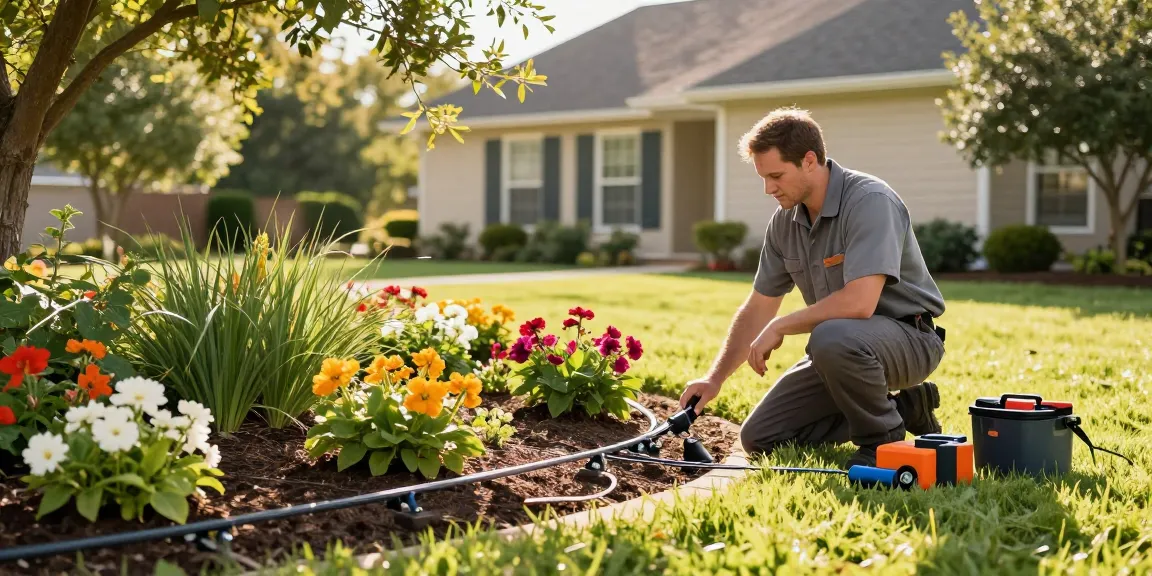
Drip systems and soaker lines apply water slowly and directly to the root zone, minimizing run-off and ensuring deeper penetration in clay. They’re also ideal where you need different moisture levels between turf and plantings — turf needs deep, infrequent watering; beds often need slower, more frequent applications while establishing roots.
Concrete example: In a yard with a 300 sq ft lawn next to a vegetable bed, set drip lines for the bed to run 25 minutes every other day for seedlings, while the turf gets a single deep soak every 4 days. That combination prevented overwatered plantings and restored the lawn’s green color in six weeks.
- Pros: Precise water placement, reduced evaporation, excellent for mixed plantings.
- Cons: More planning for layout; emitters can clog without filtration.
How to decide: match the fix to your watering challenge
Start by diagnosing the lawn: is the issue shallow roots (symptoms: wilting by afternoon), uneven coverage, or runoff? Here are decision steps with examples:
- Small, patchy lawn and budget constraints — choose portable sprinklers or a soaker hose (Mark from Austin began here and stabilized his lawn in 3–6 weeks).
- Large or complex yard with varying zones — invest in an in-ground system with a smart controller for automated, zone-specific cycle-and-soak runs.
- Clay soil or adjacent gardens — install soaker lines or drip to target the root zone and use cycle-and-soak to prevent runoff.
One quick metric: aim to provide about 1 to 1.25 inches of water per week during the growing season, applied in 1–3 deep sessions rather than daily short sprays. University extension services often recommend this range — for example, many state extensions suggest 1 inch/week as a baseline for cool-season grasses. Adjust up in extreme heat and down after rain.
Think of RainPoint as the scenario irrigation expert that helps pair setups to problems: small lawn → DIY mobile sprinklers; large lawn → smart in-ground systems; vegetable garden → precise drip irrigation; flower beds → gentle root-zone watering; potted plants → slow, steady self-watering. Pick the configuration that matches your yard and use cycle-and-soak schedules to establish deep roots and steady recovery.